Social Food

Strategic Food Safety Consulting

food safety culture

Food safety does not become effective through isolated interventions or one-off improvements. It requires structure, continuity, and the ability to connect people, systems, and daily operational reality.

Social Food’s consulting services are designed to support this transition. They focus on strengthening Food Safety Management Systems not only at the level of compliance, but at the level of organizational capability. Through a combination of structured pathways and targeted mentoring, we work with both the system and the people operating it.

Our approach integrates Food Safety Culture principles with practical system execution, ensuring that leadership intent, team behavior, and operational outcomes evolve together. Whether through staged organizational development or focused support of key professionals, consulting is delivered as a process — not a one-time intervention.

The result is a more stable, accountable, and resilient food safety system, capable of performing consistently under real industrial conditions.

food safety culture

Building structured, risk-based Food Safety Culture across production environments

Social Food provides strategic advisory support to food production and processing organizations seeking operational clarity, leadership alignment, and long-term stability.

Our work focuses on how food safety functions inside the organization — in decision-making, daily execution, leadership behavior, and accountability.

Certification alone does not guarantee control.

Stability emerges when systems are understood, applied consistently, and supported by management.

Consulting engagements may take the form of targeted advisory support addressing specific organizational challenges, or structured advisory collaborations supporting long-term cultural maturity.

When Food Safety Exists on Paper But Not in Practice

Most organizations operate within certified frameworks.

Yet inconsistency often appears in daily operations:

  • Responsibilities are defined but not internalized

  • Indicators exist but are not actively monitored

  • Audits create pressure rather than confidence

  • Culture remains theoretical rather than operational

These gaps rarely stem from lack of effort.

They usually result from structural misalignment and unclear ownership.

Our advisory work begins exactly at this point —
where documentation ends and operational reality begins.

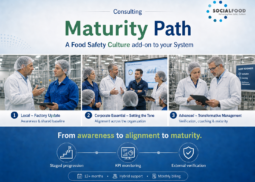
Food Safety Culture Maturity Path

In most organizations, Food Safety Culture is distributed across these levels

Food Safety Culture Maturity Path

In most organizations, Food Safety Culture is distributed across different levels of operational maturity.

Some facilities operate with strong procedural control but limited behavioral alignment.
Others demonstrate leadership commitment but lack structured monitoring mechanisms.

Understanding the current maturity level allows organizations to move forward with clarity and realistic expectations.

Our Approach: Food Safety as an Operational Culture

We approach Food Safety Culture as a management system, not as a communication exercise or a training topic.

Our methodology integrates:

  • Practical food industry experience

  • Risk-based management principles

  • Organizational behavior insights

  • Measurable cultural indicators

The objective is not improved audit performance.

It is predictable execution under real production pressure.

A Structured Path Toward Maturity Every organization operates at a different level of cultural and operational maturity. For this reason, consulting is structured in progressive stages, allowing each business to build stability at a realistic pace.

Local Foundation Facility-Level Stability

Focus: building a coherent internal base within a production unit.

This may include:

• Clarifying roles and responsibilities
• Introducing measurable cultural indicators
• Defining internal KPIs
• Strengthening operational awareness

The objective is a stable foundation capable of supporting further development.

food safety culture
food safety culture

Corporate Alignment Multi-Site Consistency

For organizations operating across multiple locations.

Focus areas may include:

• Leadership-level expectation alignment
• Corporate KPI framework design
• Modular training structures
• Cross-site communication clarity

The aim is predictable application of standards — not superficial uniformity.

Advanced Integration Long-Term Cultural Maturity

For organizations ready to embed food safety into strategic decision-making.

This stage may involve:

• Department-level capability development
• External KPI monitoring
• Effectiveness diagnostics
• Participation in management reviews
• Risk-based external validation

At this stage, Food Safety Culture begins to function as a self-sustained organizational system.

food safety culture
food safety culture

From Indicators to Measurable Stability

A strong Food Safety Culture must be observable.

Social Food supports organizations in:

• Defining meaningful operational indicators
• Establishing monitoring mechanisms
• Interpreting results for actionable improvement

This transforms culture from an abstract concept into measurable organizational stability.

Tools and Methods

Depending on organizational maturity, advisory support may include:

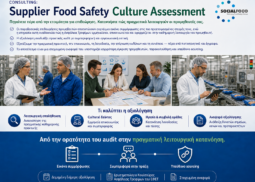
• Cultural diagnostics
• Mock audit simulations
• Climate analysis
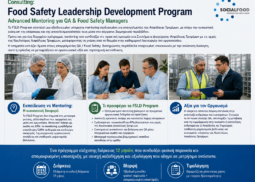
• Leadership mentoring
• Structured reporting frameworks

Tools are introduced selectively.

The objective is system support not added complexity.

food safety culture
food safety culture

Technology Integration

Technology can support KPI monitoring, communication, and training processes.

However:

Cultural clarity must always precede technological implementation.

Digital tools strengthen structure they do not replace it.

Is This For Us?

Who This Consulting Is For This service is suited for organizations that:
  • Recognize food safety as a management responsibility
  • Seek long-term operational stability
  • Are prepared for structural improvement
  • Value measurable progress

    Relevant for:
    • Production facilities
    • Multi-site operations
    • Organizations in growth or structural transition

Who This Consulting Is Not Designed For This service is not designed for:
  • Last-minute audit preparation
  • Basic documentation development
  • One-off compliance support
It is intended for structured, selective collaboration.

Our Clients Says

A Selective Collaboration

Each engagement begins with a confidential exploratory discussion.

The objective is alignment — not immediate contracting.

If strategic fit exists, a tailored proposal is developed based on:

  • Organizational scale

  • Maturity level

  • Required depth of support

Ready to get started?