Social Food

Learning Programs

food safety culture training

Training in food safety is often treated as a requirement to be fulfilled. In practice, however, its real value emerges only when it reshapes how people think, decide, and act within the system.

Social Food’s Learning Programs are designed with this principle in mind. They move beyond conventional training formats and focus on developing shared understanding, collective responsibility, and practical capability across the organization. Instead of isolated seminars, they form a structured learning environment where knowledge is connected to real operational conditions.

Our programs combine interdisciplinary insight with hands-on industrial experience, ensuring that participants do not simply receive information, but learn how to interpret situations, communicate effectively, and make better decisions in their daily work. The emphasis is placed on the “whys” behind food safety, enabling teams to internalize the purpose of systems rather than mechanically applying procedures.

Delivered either as standalone organizational seminars or as part of structured learning pathways, these programs support both the broader workforce and the Food Safety Team. They are designed to align understanding across all levels of the organization, creating a common language and a stable foundation for improvement.

In this way, learning becomes a strategic driver of Food Safety Culture — not a one-time activity, but a continuous process that strengthens the organization’s ability to operate safely, consistently, and with clarity.

food safety culture training

How Food Safety Culture Becomes Operational

Food Safety Culture does not develop through documentation alone.

It becomes stable when understanding, responsibility, and execution align across the organization.

At Social Food, structured learning is not a peripheral activity.
It is one of the most effective mechanisms through which food safety moves from concept to daily operational behavior.

When teams share the same language and leadership expectations become clear, procedures stop being theoretical and begin to function under real production conditions.

Structured learning creates the conditions for that alignment.

Take a Look at our Main Learning Programs

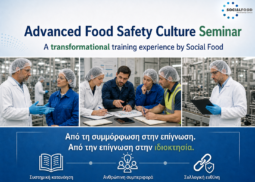
Advanced Food Safety Culture Seminar

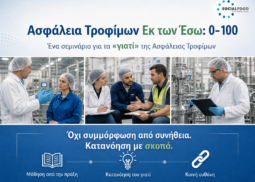
Food Safety from the Inside: 0–100

Learning Programs for Organizational Alignment Organizations operate at different levels of maturity and internal complexity. For this reason, Social Food offers learning programs designed for different organizational roles and responsibilities. Each program contributes to the development of Food Safety Culture by strengthening understanding, accountability, and practical execution.

Organizational Seminars

These seminars bring together leadership teams, quality professionals, and operational managers to examine how food safety functions within the organization.

The objective is alignment, not passive instruction.

Participants explore how responsibilities, decision-making, and internal procedures interact within real production environments.

These sessions often act as the starting point for organizations seeking to clarify how Food Safety Culture operates in practice.

Examples include:

• Food Safety Culture Accredited Seminar
• Food Safety “0–100” Foundation Seminar

Delivery formats may include on-site sessions within production facilities or structured online seminars for leadership teams.

Professional Development & Mentoring

In many organizations, the effectiveness of Food Safety Culture depends heavily on the capability of the professionals responsible for its coordination.

For this reason, Social Food provides mentoring programs designed specifically for Food Safety Managers and quality leaders.

These programs combine practical experience from industrial food safety management with structured reflection on Food Safety Culture principles.

Participants strengthen their ability to:

• interpret operational signals
• support leadership decisions
• guide teams through complex food safety challenges

Example program:

• Food Safety Manager Mentoring

Structured Learning Pathways (Coming Soon)

Self-paced programs are currently under development to support organizations with distributed teams or multi-site operations.

These programs are not generic digital courses.
They are designed as structured learning pathways aligned with specific stages of Food Safety Culture maturity.

Participation will remain selective and aligned with organizational readiness.

Education Within a Broader Strategy

Learning programs can serve different roles within an organization.

In some cases, structured education becomes the starting point of a broader collaboration, helping leadership teams observe how food safety functions across departments.

In other cases, learning reinforces an already stable system by strengthening internal capability.

Education does not replace advisory work.

It often initiates or supports it.

Is This For Us?

Who This Education Is Designed For

Social Food learning programs are designed for organizations that approach food safety as a shared operational responsibility.

They are particularly relevant for:

• production leaders
• food safety and quality managers
• plant supervisors
• cross-functional operational teams

Participants are expected to engage actively in discussion and reflection on real operational conditions.

When This May Not Be the Right Fit

These programs are not designed for:

• passive attendance
• certificate collection
• last-minute audit preparation

Their objective is to strengthen clarity, accountability, and execution within the organization.

Our Clients Says

A Selective Approach

Participation in Social Food learning programs is selective.

The objective is not to deliver training sessions, but to create conditions for meaningful organizational learning.

For organizations seeking long-term operational stability, structured learning becomes a strategic investment rather than a compliance requirement.

Ready to get started?